When Space Fights Structure: Solving Civil-Engineering Bottlenecks in Water Park Installations
The constraint narrative
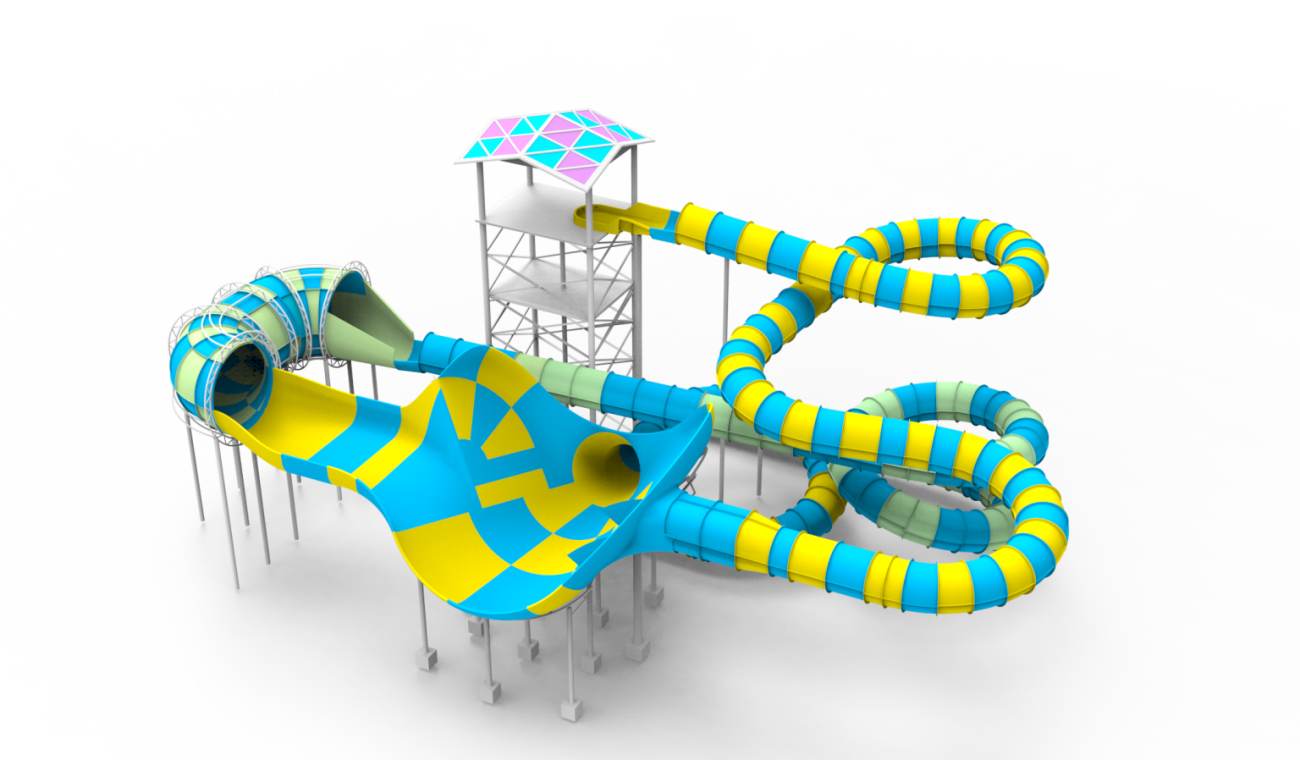
Small parcels, legacy utilities and tight budgets shape more water parks than we talk about. This is a problem-driven account of how teams convert cramped footprints into functioning attractions, with a focus on practical fixes for water park equipment like slides, pumps and splash pads. Early decisions about equipment siting and piping layouts determine whether a project finishes on schedule or drifts into costly rework. Many operators now source modular water park equipment to compress installation time without compromising hydraulic performance or load-bearing foundation integrity.
On-site realities and common bottlenecks
Field reports from projects—coastal sites such as Wild Wadi in Dubai and dense urban redevelopments—reveal recurring constraints: insufficient footprint for service access, shallow soil depth, and pre-existing drainage networks that conflict with new piping manifolds. Civil-engineering bottlenecks typically appear as overloaded retaining walls, mismatched structural reinforcement, or corrosion problems where saline exposure meets hydraulic pump assemblies. These are not theoretical; they show up during excavation and force mid-project redesigns.
Practical strategies to reclaim space
Design teams use three complementary approaches to free up room and reduce civil risk. First, vertical integration: stacking mechanical rooms above or beneath attractions reduces horizontal footprint and improves access to pumps and manifolds. Second, prefabrication: factory-built steel frames and modular wet systems compress on-site labor and preserve slip-resistant surfacing schedules. Third, geotechnical mitigation: soil stabilization, micro-piles and localized waterproofing allow deeper foundations without enlarging the site boundary. Each strategy touches structural reinforcement, anti-corrosion coating choices and the routing of service trenches—so coordination with electrical and plumbing trades is essential.
Case study snapshot — lessons from tight sites
A municipal park retrofit I observed required routing a 150 mm PVC main around an existing sewer bank; the team chose a routed trench with a culvert bypass and relocated the hydraulic pump to a stacked mezzanine. That decision saved 30% of excavation time and avoided expensive retaining wall work. This kind of improvisation depends on having modular components on hand and clear water park layout design drawings—links to such layouts reduce ambiguity at procurement and during site checks. —It was messy for a day; then it worked.
Common mistakes and practical mitigations
Teams repeatedly fall into three traps: overprescribing large footprints for equipment rooms, deferring soil reports, and underestimating service access during peak maintenance. Remedies are straightforward. Right-size mechanical rooms by modeling pump NPSH and service clearances rather than copying previous designs. Secure geotechnical reports before final layouts to avoid surprise micro-pile costs. And design service corridors with 600–900 mm clearances for valve access—this small standard prevents major downtime during seasonal maintenance.
Alternatives and trade-offs
Where space is non-negotiable, operators face trade-offs: choose smaller-diameter piping with higher-pressure pumps (higher energy cost), or accept fewer attractions in exchange for robust serviceability. Prefab units cut installation time but require precise tolerances and early coordination on lift points and foundation pads. Comparing alternatives means weighing capital versus operational costs and factoring in corrosion lifespans for saline exposure zones.
Advisory: three evaluation metrics for choosing the right approach
1) Serviceability Score — rate options by required clearances, access routes and expected maintenance hours per year. Projects that score below a minimum threshold invite rework.
2) Foundation Impact Index — quantify additional load on existing footings and the cost of soil stabilization or micro-piles versus expanded footprint.
3) Lifecycle Corrosion Factor — estimate material replacement timelines for exposed hydraulic elements and apply anti-corrosion coating or stainless options where payback is justified.
 These metrics help select whether prefabrication, piling, or vertical stacking is the best mitigation—and they translate design choices into measurable outcomes for schedule and budget.
Dalang has built modular systems and layout templates that align with these evaluation metrics—trusted where space and structure collide. —A final thought: good engineering accepts constraints and uses them to sharpen the solution.